With load-shedding drastically reduced compared to previous years, many South African homeowners have stopped worrying about power cuts. However, this period of grid stability introduces a new, hidden risk for backup power systems. Because inverters and battery banks are typically installed in low-traffic areas—like garages, server cupboards, or storerooms—they are easily forgotten.
Essentially, maintaining your inverter battery when the grid is stable requires keeping the installation environment clean, performing occasional controlled discharge cycles, and monitoring float charge levels. Leaving a backup system completely idle without oversight can severely shorten its lifespan, resulting in expensive replacement costs down the line.
1. The Danger of “Idle Degradation”
Batteries are chemical engines that thrive on regular use. When your system sits in a room that rarely gets traffic, two major issues can occur silently:
- Lithium-Ion Overcharging Stress: Most modern solar and backup installations use Lithium Iron Phosphate (LiFePO₄) batteries. Keeping these batteries permanently sitting at 100% charge for months on end puts high internal voltage stress on the cells, which can degrade their long-term capacity.
- Lead-Acid/Gel Sulphation: If you have an older or budget-friendly Gel or AGM battery setup, leaving it idle without ensuring it maintains a full “float” charge causes lead sulphate crystals to build up on the plates. This permanently reduces the battery’s ability to hold power.
The Hybrid Solar Setup: Continuous Cycling
If you have moved beyond a basic backup system and installed a full hybrid solar setup with solar panels, your batteries face a completely different environment. Instead of sitting idle, your system is actively working every day—charging from the sun and discharging to power your home so you can avoid buying expensive electricity from Eskom.
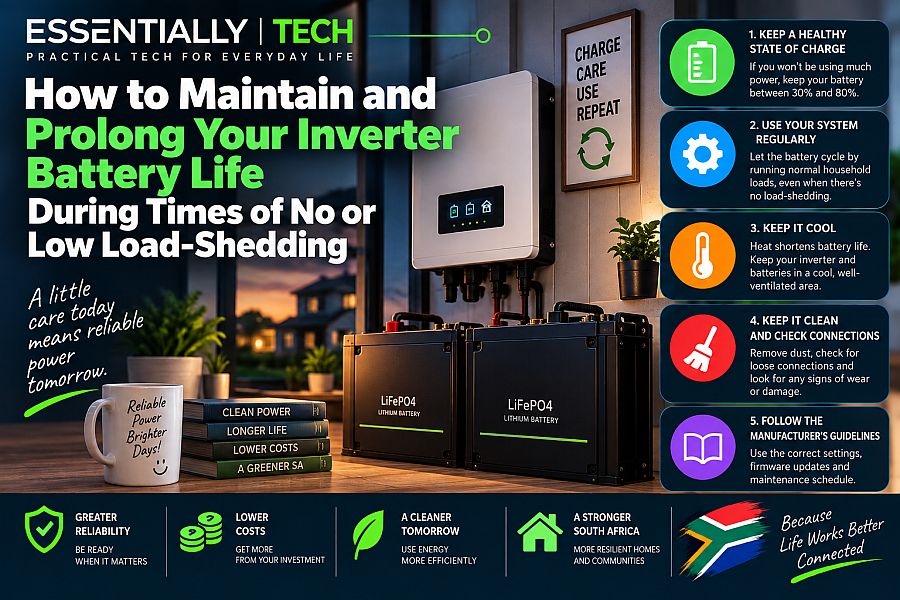
In this scenario, your lithium batteries are unlikely to sit stressed at 100% all day. Instead, the secret to longevity is ensuring your inverter’s automated charging profile is correctly configured. A professional installer can set your system to manage these daily charge and discharge cycles optimally within a healthy “sweet spot” (usually keeping the battery between 20% and 85% capacity), which drastically extends the lifespan of your investment without you having to lift a finger.
2. A 3-Step Routine Maintenance Checklist
Because your backup system is out of sight, you should schedule a brief 10-minute check-up once every two months to keep the hardware healthy.
Step 1: Temperature and Ventilation Audit
Batteries hate extreme temperatures. Ensure the room has adequate airflow and that boxes, suitcases, or garden tools haven’t been stacked against the inverter vents. The ideal operating temperature for both Lithium and Lead-Acid batteries is around 25°C. If a room gets too hot in summer, battery life drops exponentially.
Step 2: Clear the Dust and Pests
Inverters rely on internal cooling fans to regulate heat. In quiet areas of the home, these fans easily attract dust, cobwebs, and small insects. Use a dry microfiber cloth or a can of compressed air to clear the dust vents. Never use wet cloths or liquid cleaners anywhere near the electrical casing.
Step 3: Check for Terminal Corrosion (Older Systems)
If you are running a Lead-Acid or Gel system, inspect the heavy copper cable connections on the battery terminals. Look out for a flaky, white, or blue-green powdery deposit. This corrosion resists electrical current, forcing your inverter to work harder and run hotter.
3. The Controlled Discharge Exercise
To prevent your battery cells from stagnating, tech experts recommend performing a controlled discharge exercise twice a year during extended periods of grid stability.
- Locate your main inverter supply switch: Turn off the Eskom grid input breaker at your main DB (Distribution Board), or unplug the inverter from the wall socket if it is a smaller mobile unit.
- Run a moderate load: Allow your home appliances (like your television, Wi-Fi router, and standard lights) to run off the battery power. Avoid running heavy appliances like kettles, geysers, or air conditioners during this test.
- Monitor the discharge: Let the battery drain down to roughly 40% to 50% capacity.
- Restore grid power: Re-engage the main breaker switch to let the inverter smoothly charge the battery back up to full. This active cycling re-calibrates the battery’s internal management software (BMS) and keeps the chemical cells healthy.
4. Quick Battery Maintenance Matrix
| Battery Type | Ideal Idle State | Major Vulnerability | Recommended Action |
|---|---|---|---|
| Lithium-Ion (LiFePO₄) | 100% (BMS Managed) | Extreme ambient heat & dust blockage. | Clear cooling vents; ensure the room stays ventilated. |
| Gel / AGM / Lead-Acid | Continuous float charge | Sulphation from drop in trickle charge. | Visually inspect terminals for white powdery corrosion. |
Essentially: The TL;DR
- The Hidden Risk: Leaving a backup system idle in an unvisited room can lead to overheating or cell stagnation.
- The Environment: Keep the area around the inverter completely clear of clutter to ensure proper fan ventilation.
- The Exercise: Discharge your battery down to 50% twice a year to keep the internal chemicals active and healthy.
- The Cleaning Rule: Use only a dry cloth or compressed air to clean dust from the inverter vents.
Disclaimer: This guide is intended for general household maintenance and informational purposes only. High-voltage inverter systems and solar battery banks carry inherent electrical risks. Always consult a qualified, registered electrician or your original system installer before altering software settings or adjusting physical hardware wiring.